This post may contain affiliate links. If you make a purchase through one of these links, we may earn a commission at no extra cost to you. See our Affiliate Disclosure for details.
Heavy weights aren’t the priority in early postpartum strength training — control is. Resistance bands give you progressive, adjustable tension without loading your joints or your still-healing core the way a barbell or dumbbell rack can, which is exactly why physical therapists lean on them for pelvic floor and diastasis recti rehab. Here’s what to look for and which bands are worth adding to your recovery routine.
Why Bands Work Better Than Weights Right Now
Bands provide resistance that builds gradually as they stretch, so you stay in control of intensity moment to moment — you can back off mid-rep in a way that’s harder to do once a dumbbell is already moving. They also let you train the muscles that actually support postpartum recovery: mini-loop glute and hip work indirectly engages the pelvic floor as a synergist, without directly loading it, and band-resisted core exercises like the Pallof press strengthen the transverse abdominis without the intra-abdominal pressure spike that crunches cause — which matters if you’re still managing diastasis recti.
Top Picks
1. TheraBand Resistance Band Set — Best for Rehab-Level Control
Color-coded by resistance level and long enough to loop through a door anchor or under a foot, flat TheraBand-style bands are the standard physical therapists reach for. The gradual step-up between colors makes it easy to progress slowly, which is the priority in the first few postpartum months.
2. Fabric Mini Loop Bands — Best for Glute and Hip Activation
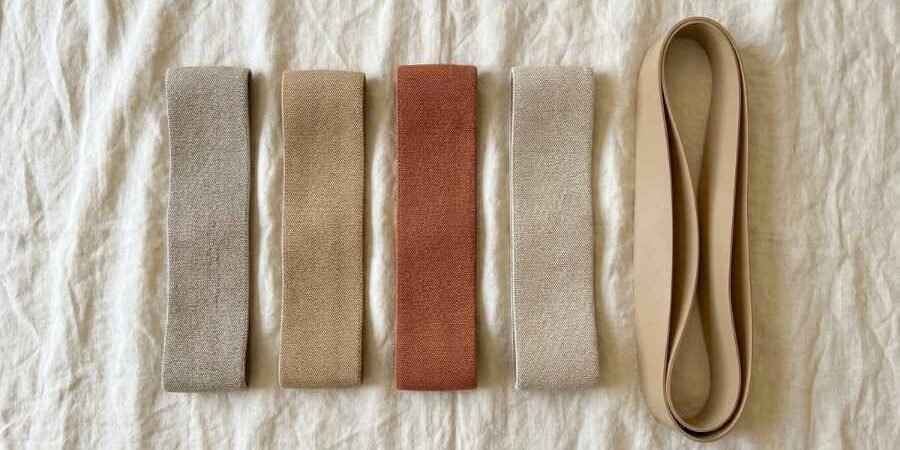
Cloth-covered mini loops sit comfortably around the thighs for glute bridges and clamshells without the rolling or pinching that thin rubber loops can cause. These are the go-to for the hip-activation work that indirectly supports pelvic floor recovery.
3. Tube Bands with Handles — Best for Full-Body Progressions
Once you’re cleared for more general strength work, tube bands with padded handles let you mimic rows, presses, and Pallof presses in a format that feels closer to free weights. Look for a set with a door anchor included so you’re not limited to floor-based moves.
4. Power Loop Bands — Best for Later-Stage Progression
Thicker power loops offer more resistance for when lighter bands stop being challenging. These are better suited to later postpartum strength training once your provider has cleared you for more demanding work, not for early recovery.
A Few Ground Rules
- Skip anything that increases intra-abdominal pressure or causes doming/bulging along the midline — that’s a diastasis recti red flag regardless of how light the band is.
- Start with the lightest resistance that still feels like “something,” not the heaviest you can manage.
- Get clearance from your OB, midwife, or a pelvic floor physical therapist before starting any postpartum exercise program, band-based or otherwise.
This is not medical advice — consult your doctor or a pelvic floor physical therapist before starting any postpartum exercise program.
Bottom Line
Start with a rehab-style flat band set and a pair of fabric mini loops — that combination covers the pelvic floor and core work most postpartum bodies need first. Add tube bands with handles once you’re ready for fuller-body strength progressions, and save power loops for later-stage training.